On this day in history: Soweto students march against government’s language policy
On 16 June 1976, Soweto youths protested against the Apartheid government's use of Afrikaans as a medium of instruction in black secondary schools.
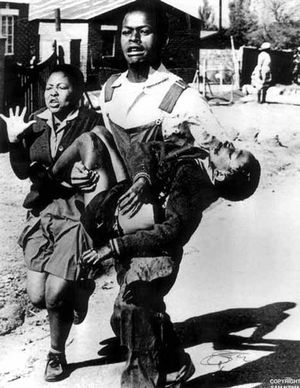

It all began as a peaceful protest march, but ended with violence, tears, blood and death of a 13-year-old boy, Hector Peterson. The Soweto uprising began when more than 20 000 learners took to the streets in protest. The uprising then escalated into a nation-wide revolt, revitalising the struggle for liberation in South Africa.
Apart from the language issue, students also demanded an education as good as that provided for white students. Police used teargas to disperse the crowd and students started throwing stones in retaliation. Police then responded by firing live bullets, killing 13-year-old Hector Petersen. During the next few days crowds attacked everything they associated with the apartheid government. Vehicles and buildings were stoned and set alight and two white officials were beaten to death. Police continued to use force in an attempt to quell the rioting. Youth Day marks not just the sacrifices made by the youth on that day, but also of those children who defied “Bantu Education” and took up arms in the struggle for freedom.
Thousands of students were exiled in Botswana, Lesotho and Swaziland. The majority joined the African National Congress (ANC) and some opted to undergo military training while others joined PAC.
On Youth Day in 2002, the Hector Pieterson Museum, the first museum in Soweto, was opened. The Museum is situated on Kumalo Street in Orlando West.
Source: SA History