

Allow me to give an opinion on the front-page article titled “No space for RDP housing” published on June 5.
The article gives an update on the outcomes of a public meeting between the MMC for Human Settlement in the City of Ekurhuleni (CoE), MMC Lesiba Mpya, of which I attended.
Another meeting on May 16 at the Alberton Civic Centre was an extended ward committee meeting between the ward councillor and residents of Ward 94.
What came out clearly in both meetings is that most of the residents of Ward 94 are not in support of the Human Settlement Project proposed by the CoE, as correctly captured in your article.
However, I am one of the few residents who does not agree with the popular view of the community.
Since the dawn of democracy in 1994, the number of households in South Africa has significantly increased and just between 2002 and 2014, the number of households increased from 10.8 million to 15.6 million with the total population of the country increasing from 47.03 million to 57.7 million people in 2018.
Majority of these households are found in informal settlements with some living under sub-human conditions in these settlements. We have such an informal settlement in the Newmarket area in Ward 94.
These are people who live in what used to be horse stables which became vacant following the closure of the Newmarket Racecourse, which gave birth to the Newmarket Shopping Mall.
As citizens, we should be concerned about the level of inequality in South Africa, which is among the highest globally and one of the common causes for the inequality is the pre-1994 spatial development policy, which placed certain groups of South Africans far from the urban centres, towns and places of employment.
The post-1994 democracy gave opportunities to some of the population to climb the corporate ladder in different industries and they were able to enter the middle class. They were able to migrate from townships and informal settlement into suburban areas.
In reality, there has been a significant improvement in income levels of people with little improvement in social services and, in this instance, integrated human settlements.
Most of our human settlements’ initiatives have mostly perpetuated the pre-1994 spatial development by not accelerating community integrations, ensuring those who are not able to climb the corporate ladder are also assisted to find access to housing closer to towns and suburban areas with better conditions of livelihoods.
A typical South African worker in the townships and informal settlements spend about 40 per cent of his salary on transport, going to and back from work. We should think about assisting to reduce the cost of living of South Africans, which can be addressed by, among other things, creating mixed human settlement developments closer to areas of employment, schools and day-to-day economic activities.
Facts about the proposed development in Mayberry Park:
• The development will provide improved human settlement units, which comply with the standard and aesthetics of the area. Therefore, the argument that this development will cause a depreciation of properties in the areas is unfounded.
• Out of 3 947 units earmarked for the development, 1 214 will be allocated for social housing which therefore means the development is a mixed typology integrating people of different classes in the entire populace of Ward 94.
• The MMC has indicated the beneficiary administration process will be opened to allow residents of Ward 94, who qualify, to also be included on the beneficiary list. So this development is not entirely for people who are outside of Ward 94 as argued by some of the people.
What we as residents of Ward 94 should be saying instead is that the CoE should package other social amenities into the development which will be implemented simultaneous, such as a school, police station and healthcare facility, even if it is not specified where the new development will happen, but at least closer.
The private sector must be brought into the development and be assisted to develop factories as it was reported in the public meeting. If it means the CoE should reduce the number of units to be built to accommodate social and business amenities, then that is what should be done, but we certainly cannot deny deserving people access to housing.
Lastly, we should be cognisant of the fact that the economic status of people does not stay the same permanently. Those who are unemployed beneficiaries can one day find employment in the local industries and be able to contribute to the economic activities of Ward 94.
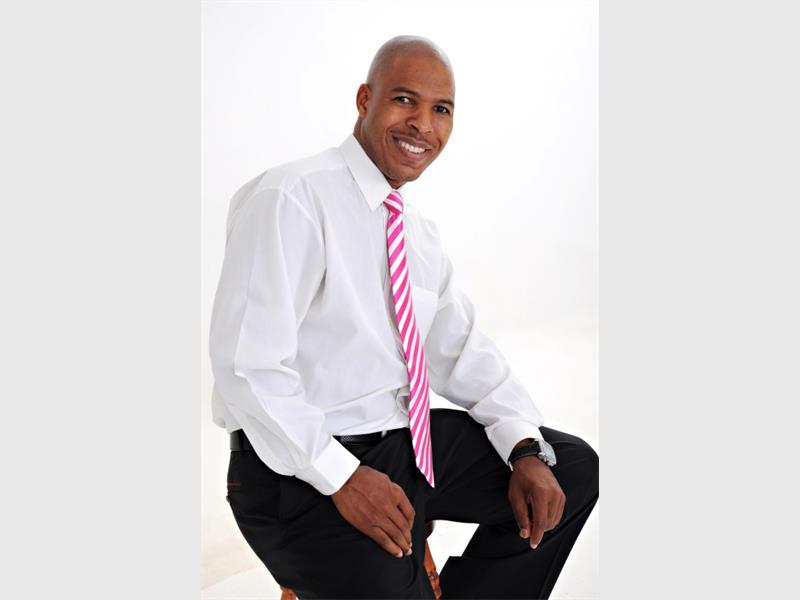
Tebogo Modise, Albertsdal
ALSO READ:
LISTEN: Ekurhuleni forges ahead with Mayberry low-cost housing development
WATCH: Mayberry Park RDP housing proposal put on ice
Mayberry Park residents don’t want RDP housing
MMC to meet with Mayberry Park about proposed RDP development
For free daily local news in the south, visit our sister newspapers Alberton Record, Comaro Chronicle, Southern Courier and Get it Joburg South Magazine.
Remember to visit our Facebook, Twitter and Instagram pages. You can also email our offices on cvdwalt@caxton.co.za, juliem@caxton.co.za or luckyt@caxton.co.za
Get regular news updates sent directly to your inbox: Newsletter-Signup