
“Sell by” or “Use by” dates not a lottery ticket
A consumer claiming damages for a miscarriage and loss of her house after she fell ill after allegedly eating a packet of crisps past their ‘Sell by’ date.
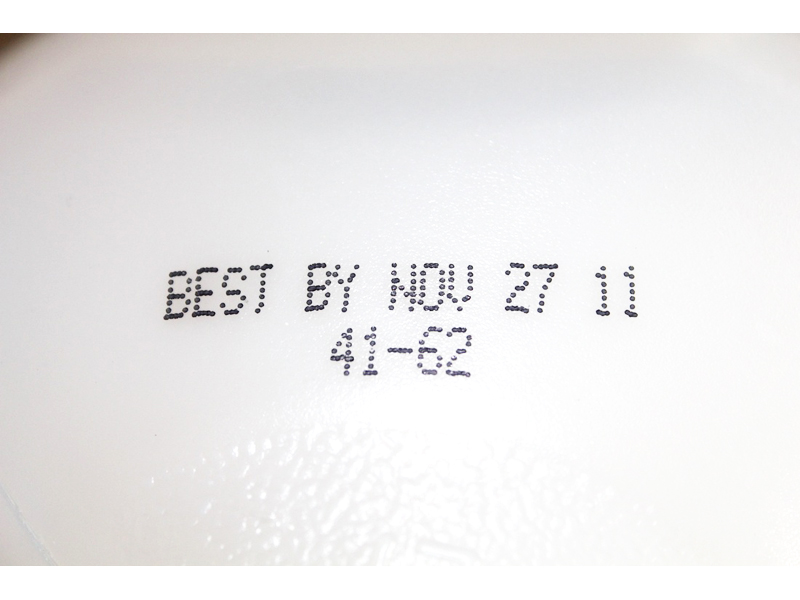

A consumer claiming damages for a miscarriage and loss of her house after she fell ill after allegedly eating a packet of crisps past their ‘Sell by’ date, highlights the confusion consumers and retailers around the legal rights of consumers when it comes to ‘Sell by’ and ‘Use by’ dates, says Consumer Goods and Services Ombud (CGSO), Advocate Neville Melville.
“’Sell by’ and ‘Use by’ dates, with a few exceptions, are more about quality, than safety,” says Melville.“It’s important to dispel the myth that you have won the lottery if you are sold something past these dates.”
Retailers and manufacturers are legally obliged to display the “Use by” and Sell by” date on products or packaging. But because there is no standardised system of determining these dates – they tend to be self imposed by manufacturers and retailers. As a result, consumers cannot rely on ‘Sell by’ or ‘Use by’ dates to have the same meaning across different stores or products.
“These dates signify an estimated date, after which the product will probably not have the same quality expected by consumers under particular storage conditions,” adds Melville. “Consumers can claim if they fall ill from eating tainted, decayed or impure food under the Consumer Protection Act, but it’s also worth considering that huge amounts of food are wasted due to misinterpretation of date labels.”
The Ombud says in cases where there is a decrease in quality of the product, the consumer would be entitled to a refund or replacement.
“When it comes to soggy biscuits, mouldy bread or sour milk, consumers will find that in most cases, in the interests of customer relations, retailers are likely to give are fund without question even if the product was sold within the prescribed dates,” says Melville.
He explains that a reasonable claim for inferior quality products sold past their ‘Sell by’ and ‘Use by’ dates is a full refund or replacement, but in the case where a product causes illness, pain and suffering or loss of earnings, damages may be sought.
“In most cases,a consumer suffering food poisoning from eating a product recover within a day or two and with no need to seek medical help,” says Melville. “But for some,the condition may become more serious and cause longer term medical conditions;some of the most extreme cases may even be fatal.”
Under the common law, a supplier can be held civilly liable in court for damages arising from food poisoning, as was the case in the matter of Muzak versus seafood restaurant Canzone-del-Mare heard by the Cape High Court in 1980.In this case, a consumer ordered mussels at the restaurant and after eating the meal experienced symptoms of food poisoning, which lead to his hospitalisation and further medical treatment. Muzak then successfully sued Canzone-del-Mare for damages which included his hospital expenses and other medical expenses.
“Surprisingly the court also awarded damages for his temporary loss of enjoyment of life for,amongst other things, being unable to work for a short duration,” adds Melville. “He did not, however, succeed in his claim for nervous shock relating to the allegation that he always enjoyed sea food and after the incident could no longer eat it out of fear of suffering food poisoning again.”
If a foodstuff sold past its ‘Sell by’ or ‘Use by’ date was the likely cause of an illness,the consumer would need to prove that their illness was not due to some other cause, such as a food allergy or an existing medical condition. They would also have to prove that they took due care to preserve the state of the food – for example, by not leaving the foodstuff in a hot car for some time.
Melville notes that in order to claim damages, the consumer’s case would be strengthened by keeping records such as the till slip, doctor’s note, hospital bills and other evidence, as well as the foodstuff for laboratory testing.
“If the supplier requests testing, consumers should keep a portion of the foodstuff for independent testing or to hand to the relevant health authorities,” says Melville. “We have had a few instances in which allegedly contaminated samples handed over to suppliers get lost in the system or suppliers test only a control sample, saying they cannot be held liable for the foodstuff while it was in the control of the consumer.”
Useful tips if you suspect that you have fallen ill due to consuming foodstuff which is past its ‘Sell by’ or ‘Use by’ date:
Seek medical advice and obtain medical evidence of your illness. Speak to your doctor or local hospital about tests based on the symptoms you are showing; keep the medical reports and document everything you can.It is difficult to pin your illness down to a particular event unless the medical information is as accurate as possible.
Keep as much evidence as possible
Freezing food usually does not damage bacteria or their toxins, so the chances are good that these will be recoverable from frozen food. Try and keep the packaging, as well as some of the product itself. Any receipts or evidence of purchase are also useful.
Undergo medical tests
Call your medical aid to find out what tests it will pay for. Bear in mind that if you cannot make out a case against the supplier of the tainted foodstuff, you may have to bear the cost of any tests done.
Take the matter up with the outlet
Call the outlet that you believe sold you tainted foodstuff.
Alert the health authorities
They will carryout an inspection to ensure that the outlet meets the necessary health and safety requirements. If not, it could bolster your case. The contact details of local health authorities are available on www.cgso.org.za
Taking it further
If your claim is not met by the outlet, contact the CGSO for assistance.
About the CGSO
The Office of the Consumer Goods and Services Ombud (CGSO) is the consumer goods and services industry’s voluntary Ombud scheme, set up in line with the Consumer Protection Act.
The CGSO enforces the Consumer Goods and Services Industry Code of Conduct by receiving and dealing with consumer goods complaints by a consumer free of charge and investigating alleged contraventions.