Learning to identify domestic violence
Domestic violence and violence/crimes against women and children represent some of the highest incidents of reported crime in South Africa.
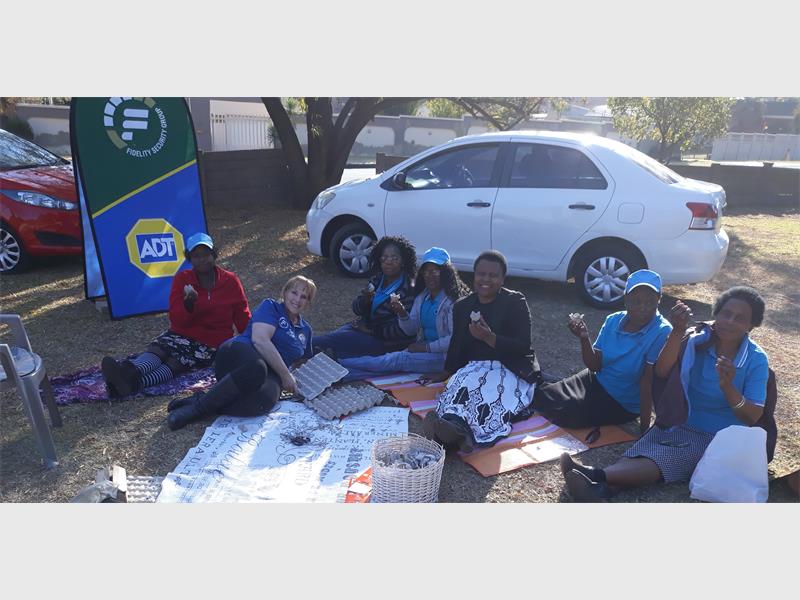

AT the Domestic Watch meeting on July 14 at the NG Church Verwoedpark, domestic staff were educated about the magnitude of domestic violence.
Awareness was also raised to help empower the community to look for tell-tale signs of domestic violence/crime against women and children and how to best report this type of crime.
According to Linda Goodenough, community development manager for Fidelity ADT, she felt the day was a success and ended on a positive note, with the ladies learning to make flowers by using egg trays.
Goodenough provides the following valuable insights:
What did we learn about abuse?
• We need to recognise when we are being abused. It is easy to think that how we are being treated is normal. Fear and anger are two main feelings that can help you recognise personal abuse.
• Abuse breaks up families, and children are often hugely affected. They can even grow up thinking that abuse is normal.
• Abuse has no boundaries – it happens at home, at school, in families, between loved ones and in the workplace.
• Early intervention is critical, but it is never too late to seek help.
• Sexual abuse in marriage (marital rape) is also a form of abuse.
• Abuse has a ripple effect and impacts society.
• Abuse effects your self-esteem, behaviour, and confidence.
• Abuse can lead to substance abuse.
• There are different types of abuse, such as emotional, work, and physical abuse.
How can we take action?
• If someone talks to you about the way they feel, i.e. being abused, they probably are. Don’t think you have to deal with the problem personally. Rather contact your security provider or SAPS directly. Phone 10111 or your nearest police station.
• Get the necessary help from the right departments. An organisation like Childline can help with any abuse against children. Take action – we need to empower and educate and give out more information on abuse.
• Most importantly, break the silence and stigma around abuse.
• Parents play an active role in your children’s lives.
• Know what to do and how to do it.
• If you are a victim, talk to anybody who is willing to listen.
• Adopt a zero-tolerance approach to abuse.
• Listen if someone wants you to listen.
• Use social platforms such as support groups for advice and help.
• Raise awareness at corporate companies, schools, newspaper, and churches.
“At the end of the day, the strongest message we all agreed upon was that we cannot accept that any form of abuse is normal. We need to speak out and never be ashamed. Know what to do or make it your priority to find out what to do. It is never too late,” concludes Goodenough.
Next session:
The group will get together again on August 2 at 2pm at the Dutch Reformed Church, Glen Drive, Verwoedpark, Alberton. The topic is How to Manage a Crime Scene. All welcome.
Remember to report crime to Alberton SAPS on 011 861 6800 or Brackendowns SAPS on 011 861 617 5600.
ALSO READ:
Raising awareness of bullying with Brackenhurst Primary learners
Brackenhurst Primary learners learn about bullies
For free daily local news in the south, visit our sister newspapers Alberton Record, Comaro Chronicle, Southern Courier and Get it Joburg South Magazine.
Remember to visit our Facebook, Twitter and Instagram pages. You can also email our offices on cvdwalt@caxton.co.za, juliem@caxton.co.za or luckyt@caxton.co.za
Get regular news updates sent directly to your inbox: Newsletter-Signup