Women’s Agricultural Union has environmental awareness event
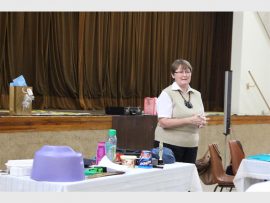
Guest speaker Annabé Pretorius from Plastix 911 spoke about environmental awareness and recycling.
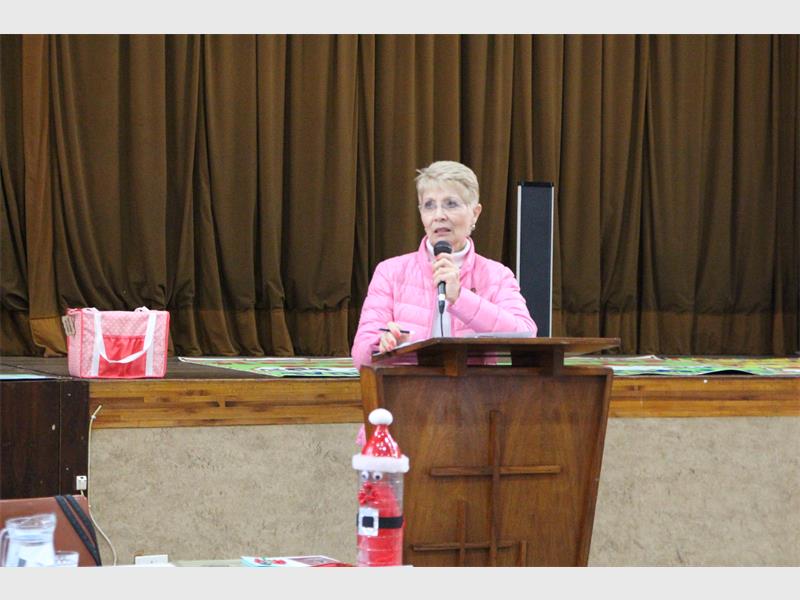

AT the recent Women’s Agricultural Union get-together at the NG Church in Brackenhurst, guest speaker Annabé Pretorius from Plastix 911 spoke about environmental awareness and recycling.
She studied plastics at the University of Stellenbosch and has been in the industry for over 35 years.
Annabé pointed out that not all plastic is indeed bad. While plastic is a pollution problem, Annebé is of the opinion that this problem often deems as a way of attracting our attention away from bigger pollution issues.
Thirty-seven per cent of people in South Africa have access to waste disposal services.
This means that in rural areas, where there are no services, plastic ends up in rivers, but not only plastic, all other forms of waste as well.
Annabé pointed out that we do need packaging. For example, the way in which chicken is packaged ensures that it has a shelf life of at least 10 days.
The plastic used in this kind of packaging keeps oxygen and germs out and the moisture in.
Vegetables, such as cucumbers, that are packaged in plastic last 13 days instead of two.
Plastic bags are used in the ripening and sweetening of bananas while they are still on the trees.
Polony is packaged in such a way to last consumers who do not have access to refrigerators.
The uses of plastic in cars ensure more efficient fuel usage and better safety when accidents occur.
Many of the ladies responded with questions and one even exclaimed that Annabé’s insights were indeed a revelation.
Towards the end of her presentation, Annabé gave the ladies some general tips on recycling and on what they could do on a daily basis to add towards a world that is environmentally friendly.
She urged the ladies to do the following:
1. To buy local, as buying local means that we leave a smaller carbon dioxide footprint on our environment.
2. To think twice before buying specials, for instance if you need one bag of potatoes, but you can buy two for the price of one and end up wasting, it is after all not such a good deal.
3. To recycle and gave further tips on easy and manageable recycling.
4. To ask domestic workers and gardeners to bring their recyclable products to work, in the case where they should not have access to waste removal, so that their products could be recycled responsibly from there.
Handy tips:
Annabé shared some tip with the ladies that she implements in her own household.
After washing her dishes every evening, Annabé washes, in the last of the dish-washing water, every piece of product that is deemed recyclable. From there she leaves it on her drying rack and the next morning each piece is added into a see-through plastic bag.
She does this because the people who recycle receive a bigger fee for clean products.
This also means they, in turn, need not wash containers in streams or rivers and in turn contribute to more pollution.
On waste removal days she leaves this bag in her dustbin outside where the people who file through our bins find it and takes it to the relevant recycling hubs.
She mentioned that all recyclables will find their way to the recycling pound in this way.
Annabé also urged the ladies not to leave a bigger carbon footprint in the process of recycling; practically this means not driving far distances to recycling areas, when we can just recycle in such a way that makes it easy for our wares to find their way to the right places.
Other tips included:
• Keep the lids of your milk and cooldrink containers on, as these containers are worth more in weight with than without.
• In general, plastic such as Glad Wrap is not recycled because of the germs that are left from meat products, but rinsing and stuffing them in a closed milk or cooldrink bottle makes sure they do find their way back to the recycler.
• Small pieces of foil or chips packets should be wiped clean of excess oil and stuffed inside cooldrink cans.
The ladies ended the morning with tea, coffee and cakes, causally chatting into the early afternoon.