South Africa won’t forget
Today commemorates Remembrance Day November 11, around the world, when all those who fell in wars as well as the holocaust victims, will be remembered.
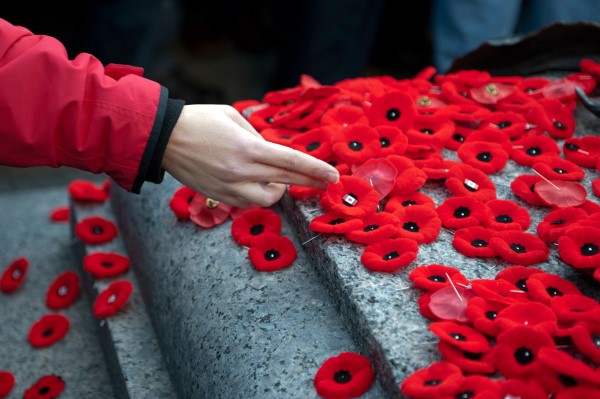

JOHANNESBURG – The annual National Civic remembrance Sunday service was held on Sunday November 8, at the Cenotaph on Beyers Naudé Square in Harrison Street and was led by the Executive Mayor of Johannesburg, Clr Parks Tau, and also attended by The Executive Mayor of Johannesburg, Clr Amos Masondo who gave a speech in commemoration of the fallen heroes.
The National Remembrance Sunday Service has been held at this Cenotaph since the inception of the war memorial in 1926. The Cenotaph was first inaugurated as a war memorial to South Africans, who fell in World War One, 1914 – 1918. Inscriptions to those who died in World War Two were added in 1947. In 2002 a further inscription was added to the west side of the monument to make the Cenotaph inclusive of everyone.
All South Africans who made the supreme sacrifice for their country in all wars and conflicts, were honoured, including the struggle for democracy. In support of the overall message “Unification and Nation-Building”, the event honour military veterans representing all communities in South Africa.
Each year a different theme is chosen for the National Remembrance Sunday Service. This year marks the seventieth anniversary of the end of World War II (1939-1945), and also the anniversary of the end of the Holocaust. Both these tragic events affected people across the world and in South Africa.
During World War II, the Union of South Africa participated with other British Commonwealth forces in battles in North Africa, and South African pilots joined the Royal Air Force and fought against the Axis powers in the European theatre.
Six million Jews were killed by the Hitler’s regime and its collaborators throughout Nazi-controlled Europe. As World War II came to an end in 1945, the victorious Allies encountered the horrifying evidence of Nazi crimes across Europe. Soviet, US, British and Canadian troops liberated the camps and found tens of thousands of emaciated and disease-ridden prisoners.
Holocaust survivors, who had lost their homes and their entire families, had to choose how to rebuild their lives. Many had nowhere to go and ended up in Displaced persons (DP) camps from where they moved to various countries, including South Africa.