Local NewsMunicipalNews
Save water this way
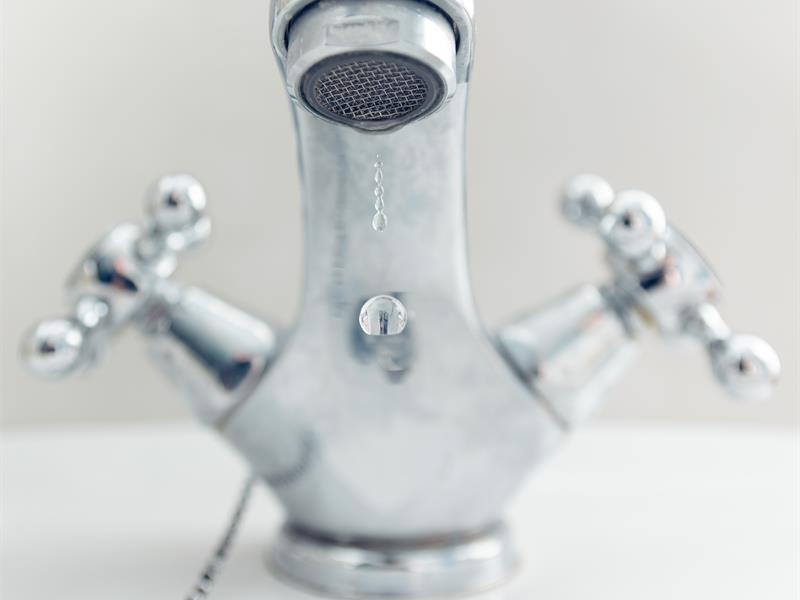
A small drip from a worn faucet washer can waste 76 litres of water per day.

ALBERTON – Ekurhuleni Metropolitan Municipality (EMM) provided the following water saving tips in light of the warm and dry summer residents of Alberton are currently experiencing.
Water saving tips in the home
- Check faucets, the stopcocks, valves and pipes for leaks. A small drip from a worn faucet washer can waste 76 litres of water per day.
- Do not use the toilet as an ashtray or wastebasket. Every time you flush a cigarette butt, facial tissue or other small bit of trash, 19 to 26 litres of water is wasted.
- Check toilets for leaks – put a little food colouring in your toilet tank. If, without flushing, the colour begins to appear in the bowl within 30 minutes, you have a leak that should be repaired immediately.
- Flush toilets only when necessary – reducing the toilet flush volume alone can save 20 per cent of the household’s total water consumption.
- Use the water meter to check for hidden water leaks. Read the house water meter before and after a two-hour period when no water is being used. If the meter does not read exactly the same, there is a leak.
- Take shorter showers or turn off the shower after soaping up, then turn it back on to rinse. A four minute shower uses approximately 75 to 151 litres of water. Taking a five minute shower a day, instead of a bath, will use a third of the water used bathing in a bath tub, saving up to 400 litres a week. If you prefer to bath, don’t fill up the bath tub.
- Turn off the water tap after you wet your toothbrush – there is no need to keep the water running while brushing your teeth. Just wet your brush and fill a glass for mouth rinsing.
- Use your dishwasher and washing machine only for full loads. Automatic dishwashers and washing machines should be fully loaded for optimum water conservation.
- When washing dishes by hand, do not leave the water running for rinsing. If you have a double-basin, fill one with soapy water and one with rinse water. If you have a single-basin sink, gather washed dishes in a dish rack and rinse them with a pan full of hot water.
- Keep a bottle of drinking water in the fridge – running tap water to cool it off for drinking water is wasteful.
- Kettles should not be filled to the brim but with just enough water for your needs.
Water saving tips outside the home
- Cover your swimming pool to reduce water evaporation.
- Do not over-fill or excessively backwash your swimming pool.
- Collect rain water to water the garden or wash the car.
- Use a bucket rather than a hose to wash your car. If you have to use a hose, use a sprayer that can be turned off in-between spraying the car.
- Do not water the gutter – position your sprinklers so water lands on the lawn or garden, not on paved areas. Also, avoid watering on windy days.
- Water your lawn only when it needs it. A good way to see if your lawn needs watering is to step on the grass. If it springs back up when you move, it does not need water.
- Water gardens less frequently and always water your plants in the early hours of the morning or late in the evening, when temperatures are cooler.
- Clean the car using a pail of soapy water. Use the hose only for rinsing – this simple practice can save as much as 150 litres when washing a car.
- Use a broom, not a hose pipe, to clean driveways and sidewalks.
- Every time you boil an egg, save the cooled water for your houseplants.
- Roof water can also be stored in tanks, for watering gardens.
- Group plants according to their water needs and mulch around them.
At Caxton, every story is written by humans. We use AI only to perform quality checks - never to generate the news. Happy reading!